
Why I (& Disney) don’t believe in self-serve only
It's not our fault, but it is our problem...

A few years back, I started noticing an odd pattern every time a product in the AI space failed to deliver what it promised. The people behind those products would shrug and blame the customer, the market, or the underlying LLMs they were using. Someone else hadn’t followed instructions. Someone else’s edge case broke the automation. The story was always the same; it wasn’t their fault.
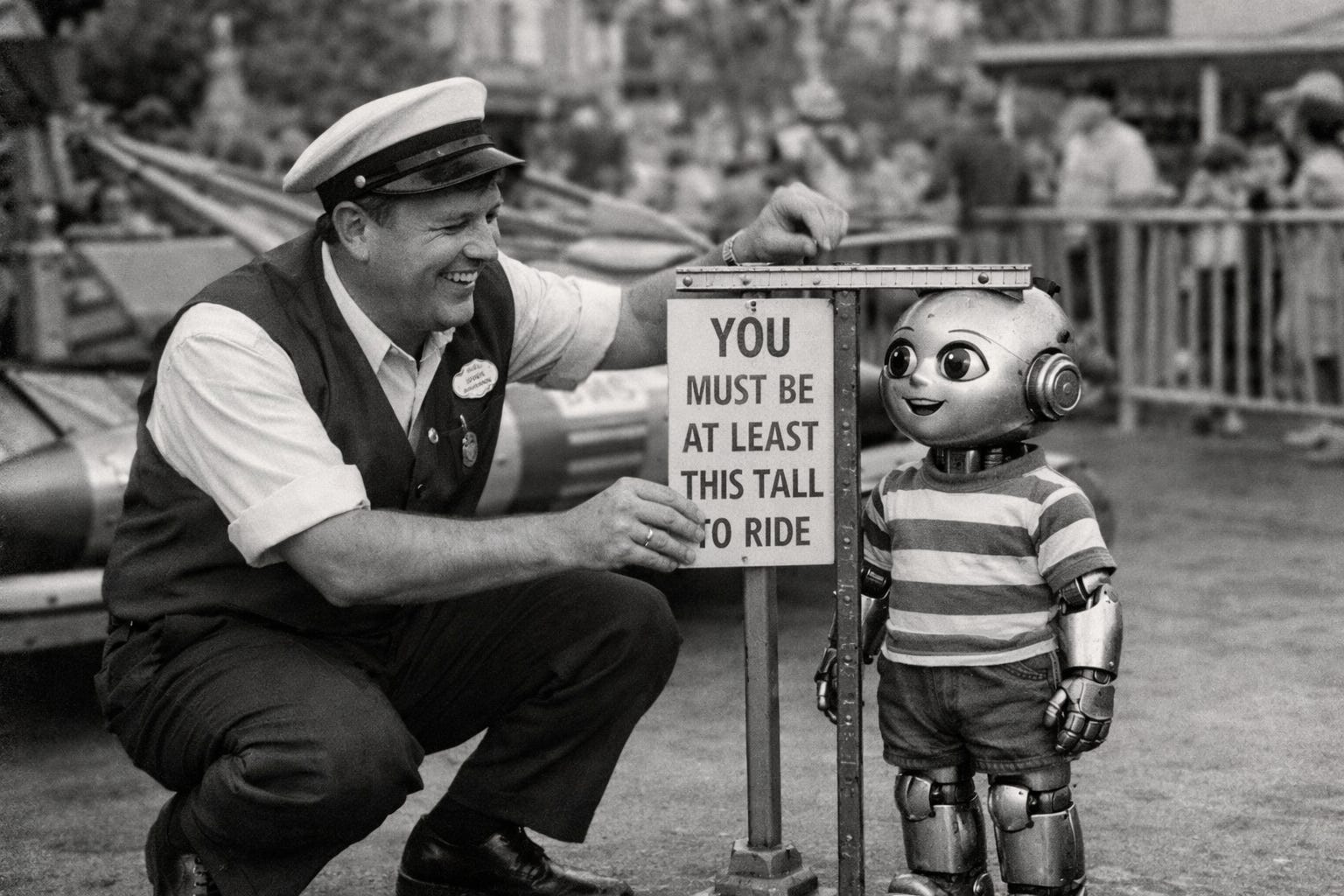
I’ve never believed that.
Maybe it’s because I’ve always been drawn to companies that put empathy front and center. But there’s a specific phrase from Disney that stuck with me and has come to help shape how we try to do things at FOMO.ai.
Technology companies like ours cannot afford to shrug off issues as “someone else’s fault.” If a customer is having a lousy time, even if something outside our control is to blame, we can choose to treat it as our problem to solve.
Where tech companies get it so wrong
Most investors in SaaS want a ruthlessly efficient model: strip out all the people, automate everything, and maximize margins. For years, the playbook has been about optimizing out the human element, and with the rise of AI, there is a lot of salivation.
But the reality on the ground looks very different. AI is changing at breakneck speed. The industry has massively oversold what its tools can deliver, especially the promise of “just sign up, and it works.” The result? People burned by bad experiences and underwhelming tools are coming back and asking for genuine support. They don’t want to feel left alone with a black box. And I actually agree with them.
I keep coming back to that Disney approach. When a child gets to the front of a 2-hour line and is told they aren’t tall enough to ride, instead of telling them it was their fault they didn’t use the measuring stick when they joined the line, they hand them a voucher to skip the line when they come back in 6 months’ time, a little bit taller. That’s what sets them apart. I want FOMO.ai to do the same at scale, even (maybe especially) when things go wrong for reasons outside our direct control.
How we use humans, and why it matters
We’re a technology company, and we’re always going to use technology to drive efficiency where it makes sense, but purposefully including humans in our processes isn’t just a “nice to have”, it’s become a core part of how we operate.
Our approach is pretty simple: we bring humans into the loop expressly to solve problems, answer questions, or provide reassurance when needed, much like that Disney cast member who can turn a small disaster into a memorable save.
Here’s the key: by focusing our human touchpoints where they have the most impact, we keep our margins healthy (higher than most traditional SaaS companies), avoid staffing bloat, and give people the kind of positive experience that builds real loyalty and trust. It’s both strategic and personal for me.
The idea isn’t to hold everyone’s hand through every click and keystroke. What we aim for is targeted intervention when someone’s stuck, frustrated, or simply needs to know that an actual person cares about getting them back on track. The result (and I’ve seen this time and again) is that the blend of human support and automation outperforms either approach in isolation.
A real example: when “not our fault” becomes “our problem” (and opportunity)
Let me give you a real story from the trenches. One of the most common things we do at FOMO.ai is help our clients generate sales and leads through AI search optimization. We’re deeply technical about it, but there are always peripheral factors that can drag results down, things that aren’t technically inside our scope.
Sometimes, a client comes to us with a situation like this: Their CEO just announced, out of the blue, “We’re launching a new service. Put it on a subdomain and get it live this week.” Suddenly, what should have been a straightforward optimization now has new technical complexity and knowledge gaps. They’re lost, stressed, sometimes even a little panicked.
Now, from a purist’s SaaS perspective, this is not our fault, this is client-side confusion, a lack of preparation. But I keep coming back to our differentiator: “If we want to be the trusted source, the company they really rely on, we have to step in and own the problem.”
Sometimes that means jumping into a private Slack channel, other times it’s a quick Google Meet to walk them through the solution. Yes, it takes extra time, but what we gain is both ethical, a sense that we actually care, and strategic: those are moments when the client’s trust goes way up and ultimately, so does our impact on their results.
James Dyson was the same. It is widely reported he once became angry in a meeting where he was been presented with a plan to optimize away all client calls. His attitude was that it’s a privelege to have a conversation with your client, even if the initial reason is negative.
And it’s not theoretical. Every time we help someone through those edge cases, we see meaningful improvements in customer retention and value. Our retention rate is significantly higher than most of the industry, and I credit much of that to consistently taking responsibility, even when it’s messy.
Human touch vs. efficiency: finding the line
I won’t pretend we’ve solved this balancing act perfectly. There’s a real tension here, and it’s something we wrestle with regularly. Having humans in the loop introduces the risk of scope creep. If every customer request and every unexpected issue leads to more and more real-time involvement, the costs can spiral.
At this point, I think we’re doing a good job. Our margins are healthy, customer satisfaction is strong, and we’re not burying ourselves in unscalable overhead. Still, it’s something I keep a close eye on. The trick is to build processes that foster empathy and support without breaking the model that keeps us growing.
What I’ve learned is that rigidity kills. If you set out to make every aspect of your product strictly “not our fault,” you not only make life worse for customers, you actually miss key signals about where your service is falling short. Conversely, if you over-index toward “solve every problem for everyone,” you lose focus and profitability. We’re all still figuring out where the line is, but I’m convinced that erring on the side of human empathy beats optimizing them out.
Why empathy is one of the only moats that last
I’ve heard the argument a thousand times: just keep automating, and soon, every AI company will run on autopilot. My worry? If that’s all we focus on, we make ourselves obsolete. Today, the differentiator is specialist knowledge, service, and trust. Maybe in ten years, the AI can handle absolutely everything, but even then, the companies that build relationships and offer empathy will be the ones left standing.
As AI gets better at mimicking needs, people’s desire for real human validation and reassurance only grows. Whenever I see a company that’s gone full “baseless,” all automation and no personality, I see a company waiting to be replaced by the next slightly better algorithm.
For me, this Disney quote isn’t just about good service; it’s a strategy for long-term survival. The more you lean into humanity and accountability, the stickier your customer relationships become. That’s a great extra moat to have.
What you can use today
I’ve learned a few things that I think apply well beyond my corner of the AI world. If you’re building anything, tech or otherwise, here’s what I’ve found helpful:
Treat every user frustration, even if caused by something “external,” as your chance to shine. Pick the moments to step up and solve it anyway.
Use human intervention not as a cover for failure, but as a force multiplier for success. Focus on moments where empathy and expertise matter.
Stay vigilant about scope creep. Offer targeted support, not boundless hand-holding. Build feedback loops to know where you’re adding value.
Measure results by retention and loyalty, not just short-term efficiency. The best customer is the one who sticks around when things get tough. All 10 of our first ever 10 clients over 2 years ago are still with us today, as are 90% of all the others.
Most crucial: never let technology become your only identity. Bring personality, humor, and a sense of reassurance to every interaction.
Responsibility doesn’t stop at the edge of your product. If something goes wrong, whether or not it’s your fault, making it your problem to solve is the fastest way to build trust, loyalty, and long-term advantage. Empathy is not a cost center; it’s your biggest strategic asset in a world racing toward faceless automation.
Dax is the Co-Founder & CEO @ FOMO.ai, and the author of 84Futures.com.
👉 Founder or operator? You can now schedule a 1:1 session with me.